


Cue the “Taps” and tap some kegs. Legendary Lt. Col. Robert K. Brown is gone from this Earth at 93. I know where he is because Bob shared a secret with me in his office 25 years ago.
He died Aug. 28., and his death was a secret until Monday. Most of us close to Bob had no idea. His widow, a former international law professor at the University of Colorado Boulder, honored his wishes: no obituary, no fanfare, and not a word until he was firmly in the ground. So on Monday, with the headstone set and on what would have been his 94th birthday, she announced his death on Facebook. The post said heaven is “no doubt a lot rowdier.”1
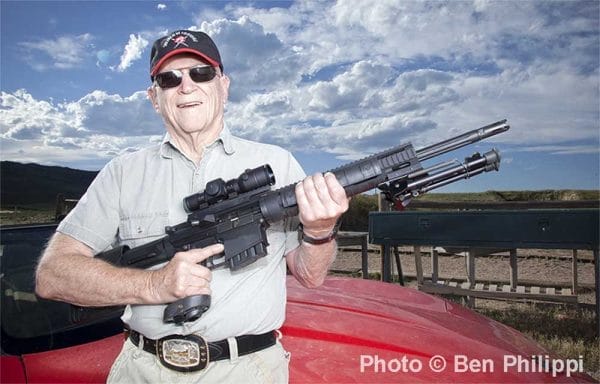
I worked for him as managing editor of Soldier of Fortune, the magazine he launched in Boulder in 1975 as a forum for veterans. Generations younger than Gen X barely know his name but to Vietnam and post-9/11 vets Brown was a publishing celebrity on the order of Hugh Hefner or William F. Buckley Jr. (Speaking of Hefner, Playboy magazine published an in-depth article on Brown in April of 1987, when I was in college.)2
Brown was a Green Beret with two tours in Vietnam, where he received a Bronze Star and a Purple Heart. A 1969 mortar attack in the Central Highlands nearly killed him. Army medic Robert Bernard saved him, and the two remained friends for decades.3 Still, the blast ruined Bob’s hearing, and to visit with him was to yell at his hearing aids.
Boulder before Boulder was Boulder
Bob graduated from CU in 1954 and came back for post-graduate school after Army service. He briefly fell for the romance of the Cuban revolution and raised money for Fidel Castro’s guerrillas by parking a 20 mm anti-tank gun behind the student union at CU with a donation jar in front of it. Students filled it.4
Then Castro showed his true colors. Bob figured out he’d bankrolled a communist and spent the next six decades atoning for it.
He kept Soldier of Fortune in Boulder for 47 years. In the Boulder publishing mecca, journalists knew it was a cushy place gig — that is, if it didn’t kill your future career prospects. Mine survived just fine. Brown told Maxim that Boulder was “25 square miles of hippy-dippy bulls—t, surrounded by reality.”5 That was Bob’s love language.
Bob dropped something like an F-bomb into nearly every sentence he spoke, but he had recoined the word as fauck. Perhaps thought God was OK with the “o” sound in place of the “u.”
Bob ran the magazine out of a large three-story building in east Boulder, which was overstaffed and bristling with life. It was part newsroom, part armory, part frat house, and part war regalia shopping mall. It housed the famous Paladin Arms guns store, a shooting range, and a gym with a hot tub. Manufacturers sent guns, hoping for reviews. Employees walked past racks of war rifles on the way to the coffee pot.
As I took the reigns, my Aspen-based acquaintance Hunter S. Thompson wanted to write for us; he had begun negotiations with my predecessor. Bob was good with it, until Thompson said he didn’t want money. His remuneration would be obscure guns on his bucket list. Bob said, “isn’t he a drug addict?” Negotiations ended there.
I produced the monthly “World Sitrep” feature, an update of every significant conflict on the planet, and gained a veritable Ph.D. in geopolitics. I never knew enough for Bob, who often told me to “lose weight and read more.” Most of the staff were combat vets Bob had hired into well-paid sinecures. They knew war. They did not know magazine production. I was one of the few civilians, and they treated me with a level of pleasant respect so common among battle-proven soldiers.
Bob hired me after reading my Boulder Planet newspaper columns defending the Second Amendment. He asked what I earned. “I’ll double it,” Bob said. End of discussion. “When do I start?” I asked.
To Bob, it was important that his employees make ends meet.
Putting his money where his mouth was
Bob spent a personal fortune fighting communism. The magazine recruited for the Rhodesian Army in the 1970s. In the 1980s his editors trained Salvadoran troops, armed only with handguns, and walked combat patrols with them. They briefed the U.S. Embassy on how the soldiers fought.6 Bob backed the Mujahideen and the Contras. In Nicaragua, he offered a $1 million reward to any Sandinista pilot who would deliver a Soviet-built helicopter gunship.7 He spent more than $300,000 in personal cash to hunt for POWs left behind in Southeast Asia.8 Few men live selflessly for others. He was among them.
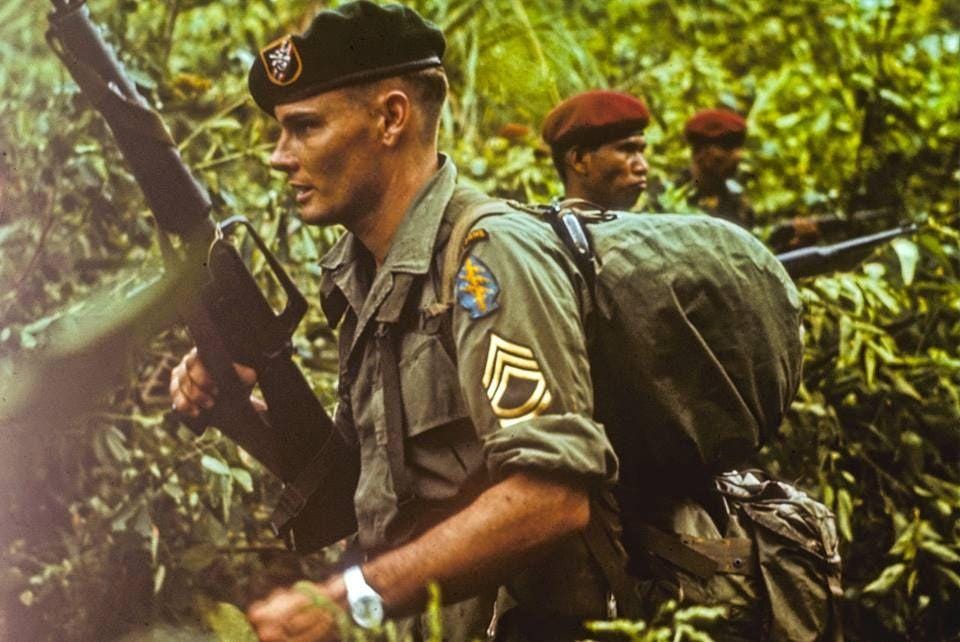
Critics called it mercenary work. For Bob, it was about stopping more tyrants like Castro and the Soviet politburo despots.
Not every mission went as planned. In 1984, the night before a trip to El Salvador, a buddy showed off a pistol he thought was empty. It wasn’t. A bullet went through the friend’s hand and into Bob’s calf. Bob’s response, as recounted by Pulitzer-winning Chicago Tribune columnist Mike Royko: “You stupid son of a bitch, you shot me. And now I can’t go to El Salvador.”9
During the Gulf War, Bob griped to The Wall Street Journal that he was stuck in a briefing room with “the biggest bunch of boobs and dorks I’ve ever met.” Weeks later, he rolled into Kuwait City right behind the lead tank.10
On national security he was hard right. Socially he could be shockingly progressive, beyond my comfort zone.
When a male magazine associate drove to Trinidad, Colorado, and came back a woman, Bob could not have cared less. Two years ago, over lunch with Bob and my wife at Phantom Canyon Brewing in Colorado Springs, I reminisced about the transition story. Bob knew how to use his nearly useless ears for personal gain or just plain fun.
“He had a what?” Bob asked, hand cupped behind his ear. “A sex change,” I said, trying to keep our conversation at the table. About the fourth time Bob feigned not hearing me, I shouted “A SEX CHANGE.” The place went silent and patrons stared. Bob gave me his “gotcha” smile. That was the man I knew and loved.
The Second Amendment’s happy warrior
Nobody fought harder for our right to keep and bear arms. Bob told me the people most in need of this right were minorities, the elderly, the poor, the disabled, and the LGBT community. Though he never flaunted personal virtue, he despised bigotry and other social injustice. He hated when the strong harmed the weak simply because they could.
That was his heart — but he was far from perfect. Much like he scoffed at Thompson’s’ drug use, he reacted negatively to my suggestion that his fellow NRA board member, rockstar Ted Nugent, speak at the next convention in Vegas.
”Isn’t he that long-haired guy?” Brown said, rubbing his own bald scalp. The answer was a non-negotiable “no.”
In the 1990s, Soldier of Fortune hammered the Clinton administration’s gun-control push month after month. Bob sat on the NRA Board of Directors for more than three decades, one of the longest-serving directors in its history, and was a trustee of the NRA’s Whittington Center range in New Mexico.11 Brown was frequently at odds with the NRA administration and staff, as well as fellow board members with differing agendas.
To the private-jet crowd around former NRA CEO Wayne LaPierre, Bob was a pain in the ass. As early as 2011, Bob was firing off emails demanding to know why the NRA was spending millions for what he considered poor results. He threatened to air the LaPierre administration’s dirty laundry at the National Press Club, warning, “The Brown line has been crossed.” Years later, New York’s attorney general used Brown’s allegations to drive LaPierre out.12
In the gun rights movement, he was loved, loathed, and respected. This spring, at 93, Bob was re-elected to the board for a term running through 2028.13 Chris Kyle, the American Sniper, signed a copy of his book to Bob, crediting him with inspiring him to enlist. It was among Bob’s most cherished possessions.14
Bob earned millions from the magazine and gave chunks of it away, reliably to combat vets who needed better lives. In the magazine’s more prosperous era, Brown paid vets’ mortgages and lent money he knew he’d never get back.
Keep these men drinking
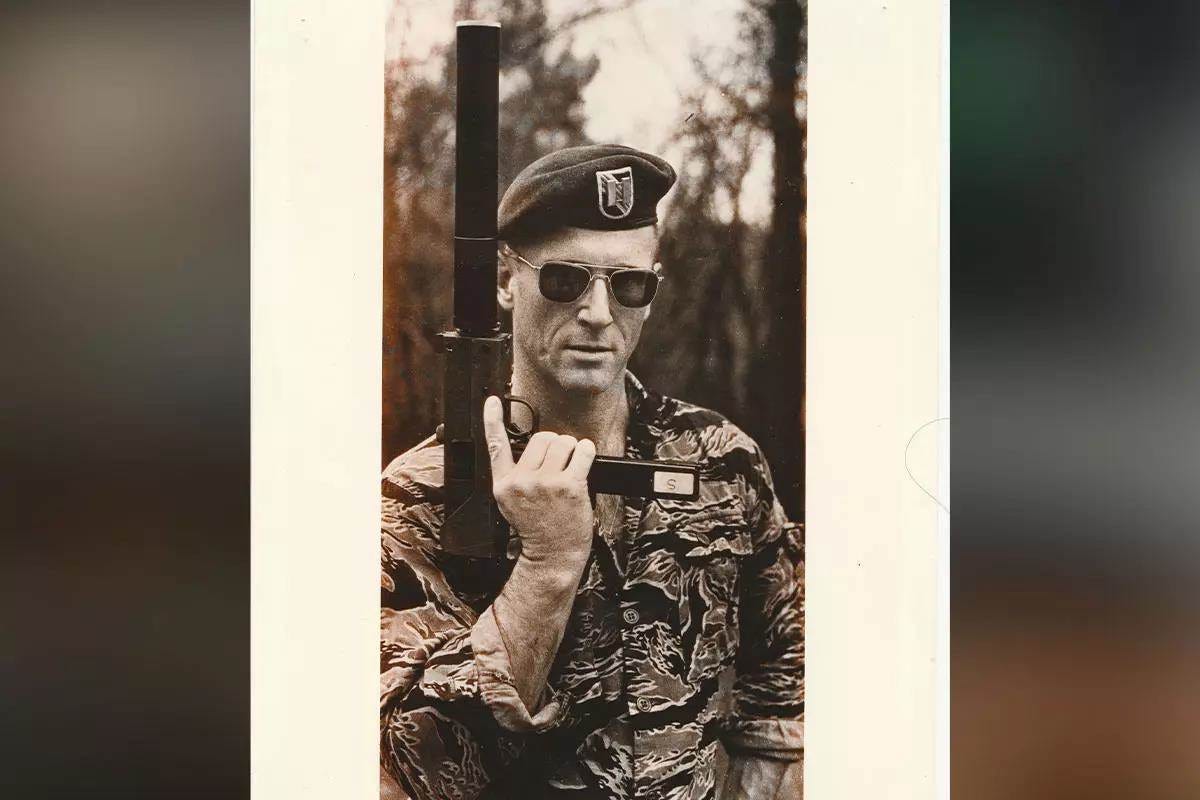
In the 1990s, the annual Soldier of Fortune convention took over an entire Las Vegas casino and I ran PR. In 1999, Mayor Oscar Goodman handed Bob a key to the city and declared the Soldier of Fortune and Lt. Col. Robert K. Brown Day.15 I couldn’t book all the reporters who wanted his time.
At one convention we awarded Col. Paul W. Tibbets, pilot of the Enola Gay, the magazine’s humanitarian award. Brown said by nuking Japan, Tibbets saved more lives than he took.
The next year, our convention came weeks after the massacre at Columbine High School. I suggested awarding Joel Myrick, a veteran, Harvard-educated vice principal in Pearl, Mississippi, who used his handgun to stop a mass shooter who had killed two students and injured seven others. Col. Brown hated violence, but knew the innocent needed strength in a world of intractable evil.
During our conventions, vets gathered around the casino pool each night. Bob would hand me an American Express and say, “Keep these men drinking. This goes better if they’re drinking.” I overheard war stories never told in movies. These tales were as true as the tears of the men telling them while numbing their emotions.
Into his 90s, Bob and a carload of friends routinely drove to Whittington for shooting weekends. He always stopped for lunch with me in Colorado Springs on the way to or from Whittington. I never made the range with him, but the invitation always stood. I regret not making that time.
A great Coloradan and an American icon is gone. I know where he went because he shared something personal with me in one of our philosophical discussions, amid the war relics that adorned his office. He meant it.
”Wayne, you’re a good Catholic boy. I respect that,” said my friend and boss. Then he pointed his index finger at me, as if to emphasize the point. “As you know, I’m not a religious man. But I sure as fauck plan on a deathbed conversion.”
Support this work with a paid subscription/contribution.
Every bit helps. Thanks!
Notes
Harold Hutchison, “Robert K. Brown, Publisher And Advocate For Second Amendment, Vets Passes Away At 93,” Daily Caller, Nov. 3, 2026. Brown was born Nov. 2, 1932, in Monroe, Mich. (Wikipedia). ↩
“Playing Soldier,” Playboy, April 1987. playboy.com/magazine/articles/1987/04/playing-soldier ↩
Lukas I. Alpert, “Meet the Mail-Order Mercenaries of ‘Soldier of Fortune’ Magazine,” Maxim, Feb. 24, 2016. Service record (1954–1957, 1964–1985; Bronze Star, Purple Heart, Air Medal) per Wikipedia. ↩
Paul Danish, “The ‘Soldier of Fortune’ memoirs,” Boulder Weekly, May 29, 2014. ↩
Alpert, Maxim, 2016. Brown sold the magazine to Susan Katz Keating in 2022 (Wikipedia). ↩
Robert J. McCartney, “Soldiers of Fortune Lend a Hand in El Salvador,” The Washington Post, Aug. 29, 1983. On Rhodesian recruiting, see “Soldier of Fortune (magazine),” Wikipedia. ↩
Alpert, Maxim, 2016; the $1 million figure for a Nicaraguan pilot’s defection with a Mi-24 Hind is reported in “Soldier of Fortune ends print run,” Last Stand on Zombie Island, March 3, 2016. ↩
Alpert, Maxim, 2016. ↩
Mike Royko, “Mercenaries for Hire,” syndicated column, Youngstown Vindicator, March 29, 1984. ↩
Danish, Boulder Weekly, 2014, recounting Brown’s 1991 front-page Wall Street Journal quote. ↩
Alpert, Maxim, 2016, which in 2016 described Brown as having served on the board for three decades and as a Whittington Center trustee. ↩
“Leaked Emails Reveal Warnings to NRA Leadership About Corruption Years Before NY Lawsuit,” AmmoLand, July 2025. ↩
“2026 NRA Board Election Results (Updated),” American Rifleman, April 2, 2026. ↩
Alpert, Maxim, 2016. ↩
Proclamation of Sept. 22, 1999, honoring the magazine’s 20th annual convention, per “City of Las Vegas declares Wednesday Soldier of Fortune Day and Lt. Col. Robert K. Brown Day,” Business Wire, 1999. ↩